Shabby Chic Cat Junk Journal Pages: A Designer's Dream Bundle
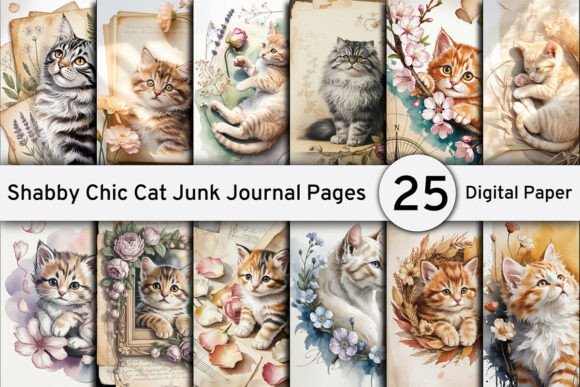
There's a particular kind of magic in textures that tell a story—faded florals, aged paper, soft watercolor washes. The Shabby Chic Cat Junk Journal Pages bundle captures this perfectly, offering 25 printable digital backgrounds that blend vintage charm with feline whimsy. If you work in design, crafting, or run a small creative business, these assets solve a common problem: finding high-quality, versatile backgrounds that don't look generic or mass-produced.
The Visual Personality of Shabby Chic
Shabby chic isn't just an aesthetic—it's a feeling. Think distressed lace, muted pastels, and the kind of soft imperfection that makes something feel handmade rather than manufactured. The Shabby Chic Cat Junk Journal Pages bundle leans into this beautifully. Each background features layered textures, subtle patterns, and a color palette that whispers rather than shouts. The cat motifs aren't cartoonish or overly literal; they're woven into the design with an artistic hand, appearing as watercolor silhouettes, vintage illustrations, or delicate line work that complements rather than dominates.
What makes these backgrounds genuinely useful is their seamless digital paper format. At 12×16 inches and 300 DPI, they're production-ready for both print and digital applications. The RGB color mode ensures vibrant on-screen rendering, while the resolution holds up beautifully when printed. You're not getting a collection of decorative images—you're getting design assets that function as professional backgrounds across multiple project types.
Where These Backgrounds Truly Shine
Let's talk about practical applications, because that's where the real value lives.
For scrapbooking and junk journaling: This is the obvious starting point, and the bundle delivers exactly what you'd hope. The layered, vintage-inspired textures create instant depth. You can print them on cardstock or specialty paper and use them as foundation pages, or print at smaller scales for ephemera, pockets, and decorative elements. The cat details add personality without overwhelming your layouts.
For sublimation and POD projects: If you run a print-on-demand shop, these backgrounds work beautifully for mugs, tote bags, throw pillows, and phone cases. The seamless format means you can scale and tile them without visible seams, and the soft color palette appeals to a broad audience—especially cat lovers who appreciate something more refined than novelty graphics.
For invitations and stationery: Wedding invitations, baby shower cards, pet memorial keepsakes—these backgrounds set a tone that's elegant yet approachable. Pair them with a script font or handwritten font for a cohesive vintage look, or use a clean sans serif font for modern contrast.
For wall art and posters: At 3600×4800 pixels, these backgrounds have enough resolution for large-format printing. Create standalone art prints, gallery wall pieces, or decorative posters for pet-themed boutiques and cafés. The shabby chic aesthetic works particularly well in interior design contexts—think farmhouse décor, cottage-style bedrooms, or cozy reading nooks.
For digital projects: Website backgrounds, social media graphics, blog headers, digital planners, and e-book covers all benefit from textured, visually interesting foundations. These backgrounds add warmth and character to screens that might otherwise feel flat and clinical.
Design Considerations and Practical Tips
Working with textured backgrounds requires some thought about visual hierarchy and readability. Here's what I've learned from years of using similar assets:
Layer strategically. Don't place body text directly over the busiest areas of a background. Use semi-transparent overlays, text boxes with subtle fills, or position your content in areas where the texture is lighter. The Shabby Chic Cat Junk Journal Pages bundle includes enough variety that you can choose backgrounds with quieter zones for text placement.
Font pairing matters enormously. These backgrounds have a distinct personality—romantic, vintage, slightly whimsical. A geometric sans serif font can create beautiful tension and modernity. A serif font with moderate contrast reinforces the classic feel. Avoid overly ornate display fonts that compete with the background texture; instead, let the texture be the star and choose typefaces that support rather than clash.
Consider your audience. Shabby chic resonates strongly with specific demographics—women 25-55, pet lovers, vintage enthusiasts, crafters, and people who appreciate handmade aesthetics. If you're building a brand identity around these values, these backgrounds become more than decorative elements; they become part of your visual language.
Test before committing. Print a few samples on your intended paper stock. View digital designs on multiple screens. The soft, muted tones of shabby chic design can shift depending on color profiles and display settings. Since these files are RGB, convert to CMYK thoughtfully if you're heading to professional printing—some of the subtle pastels may need adjustment.
Think beyond the obvious. Use these backgrounds as texture layers in Photoshop, blending them at reduced opacity over solid colors. Extract individual elements—like the cat illustrations or floral motifs—and use them as standalone design components. The 25 printable digital backgrounds in this bundle offer enough range to support an entire visual system, not just individual projects.
Building Creative Projects with Confidence
The difference between amateur and professional design often comes down to the quality of foundational elements. A mediocre background can undermine an otherwise strong layout. The Shabby Chic Cat Junk Journal Pages bundle gives you production-quality backgrounds at a price point that makes sense for independent creators and small businesses. You're investing in design assets that work across your entire creative workflow—from initial concept to finished product.
Whether you're designing a logo for a pet boutique, creating social media graphics for a cat-themed brand, laying out editorial design for a lifestyle magazine, or building packaging design for artisanal products, these backgrounds provide a consistent, professional foundation. The key is using them thoughtfully—understanding their personality, respecting their visual weight, and pairing them with complementary design choices.
Start with one project. Print a test page. Layer some text. See how the texture interacts with your other design assets. You'll quickly discover whether this aesthetic aligns with your creative vision—and if it does, you have 25 versatile backgrounds ready to support everything you build next.